Double vs. Triple Eccentric Butterfly Valves: How to Choose the Right Design for Water and Industrial Projects
In large pipeline networks, a butterfly valve is often chosen because it is easy to operate, takes up less space, and works well in a wide range of installations. The real difference appears when the service conditions become more demanding. Once a system requires tighter shut-off, faces repeated pressure variation, or is expected to run for years with limited maintenance interruption, the internal design of the valve becomes a serious part of the decision.
For this reason, many engineers and buyers compare the double eccentric butterfly valve with the triple eccentric butterfly valve when evaluating options for water infrastructure and industrial piping systems. While the two designs are similar in basic form, they are developed for different operating priorities. The right choice can help control wear, improve sealing consistency, and support stronger long-term performance across the line.
Why Eccentric Butterfly Valve Design Matters
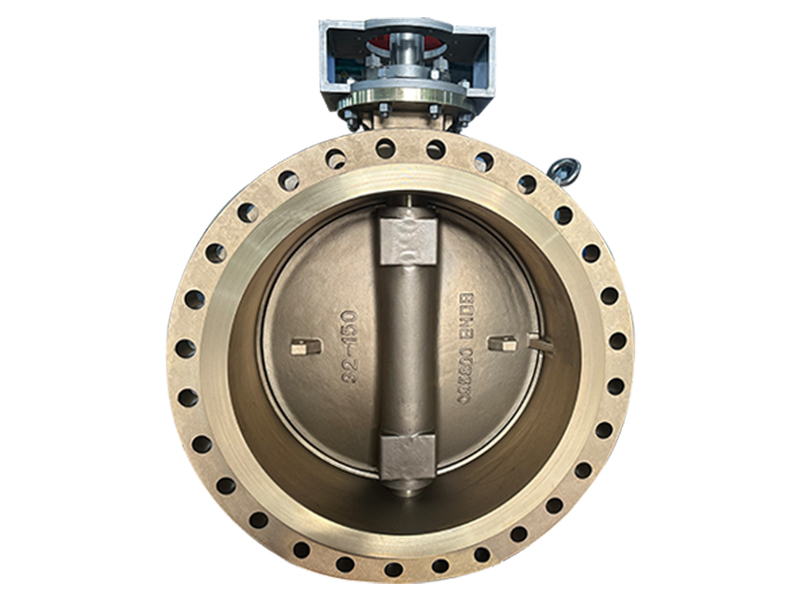
The word eccentric describes more than a design detail. In a butterfly valve, it refers to an offset relationship between the stem, disc, and sealing surface that changes how the valve moves through each open and close cycle. Because the disc does not contact the seat in the same way as a centered design, friction and wear can be better controlled.
That is one of the main reasons eccentric butterfly valves are widely used in both water treatment systems and industrial pipelines. With less surface contact during operation, the valve can offer more dependable shut-off, longer service life under frequent cycling, and more stable performance in tougher pressure conditions. Where uptime, maintenance planning, and operating safety matter, that design advantage becomes especially valuable.
Double Eccentric Butterfly Valve: A Practical Choice for Water Systems 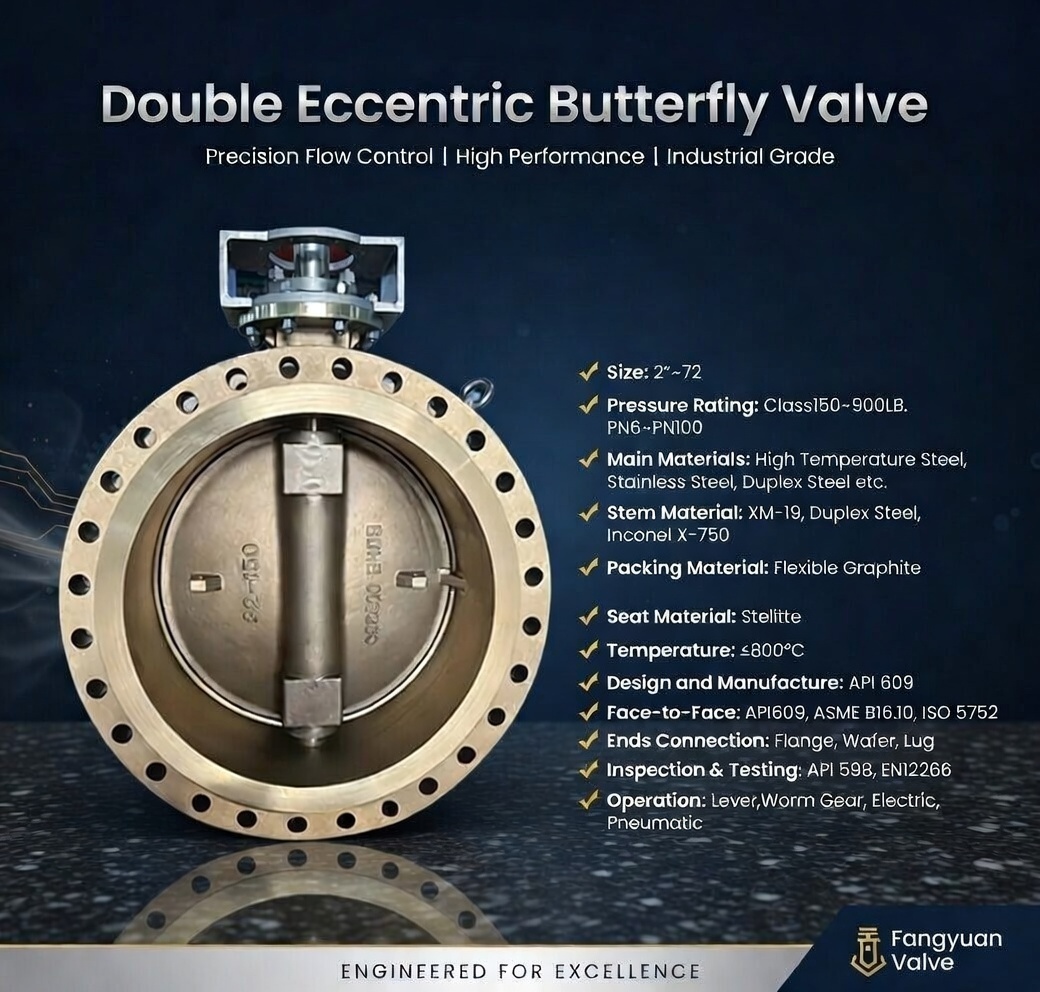
A double eccentric butterfly valve, often referred to as a high-performance butterfly valve, is widely used where dependable sealing and efficient flow regulation are required without the complexity of more severe-duty valve structures.
Typical advantages
- lower friction than concentric designs
- improved sealing performance
- good durability for repeated operation
- suitable for larger waterway and utility pipelines
Common applications
- water treatment plants
- municipal water systems
- power plants
- steel and metallurgical facilities
- environmental engineering projects
For many users, the main benefit of a double eccentric butterfly valve is balance. It offers better sealing and durability than basic butterfly valve designs while remaining practical for a broad range of water and general industrial applications.
Triple Eccentric Butterfly Valve: Built for More Demanding Conditions
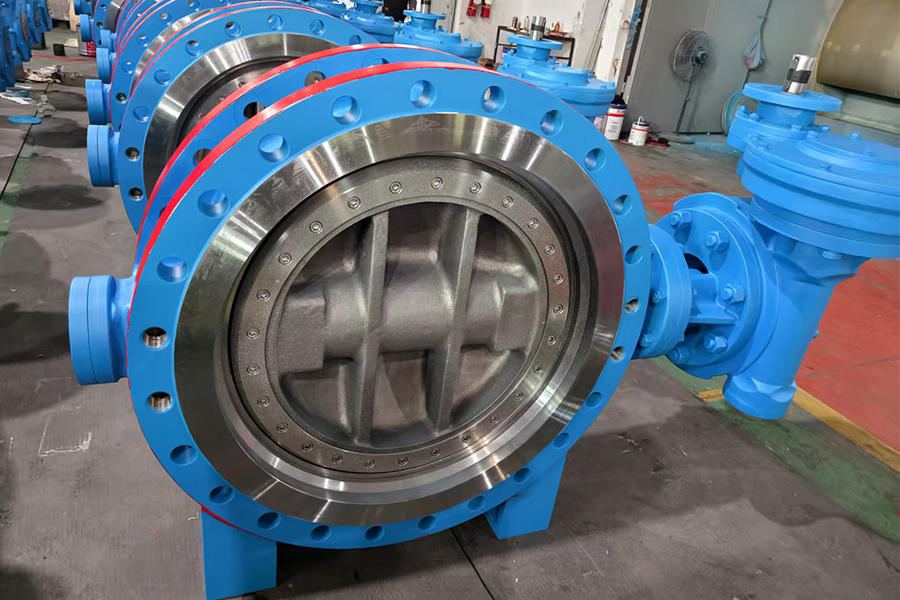
When a pipeline system demands tighter sealing and more dependable performance over time, a triple eccentric butterfly valve often becomes the preferred option. The design uses a three-offset arrangement that changes the motion of the disc as it moves through the seat, helping avoid the kind of rubbing that can shorten seat life in less advanced valve designs. The result is lower wear, better sealing consistency, and more reliable operation in tougher service conditions.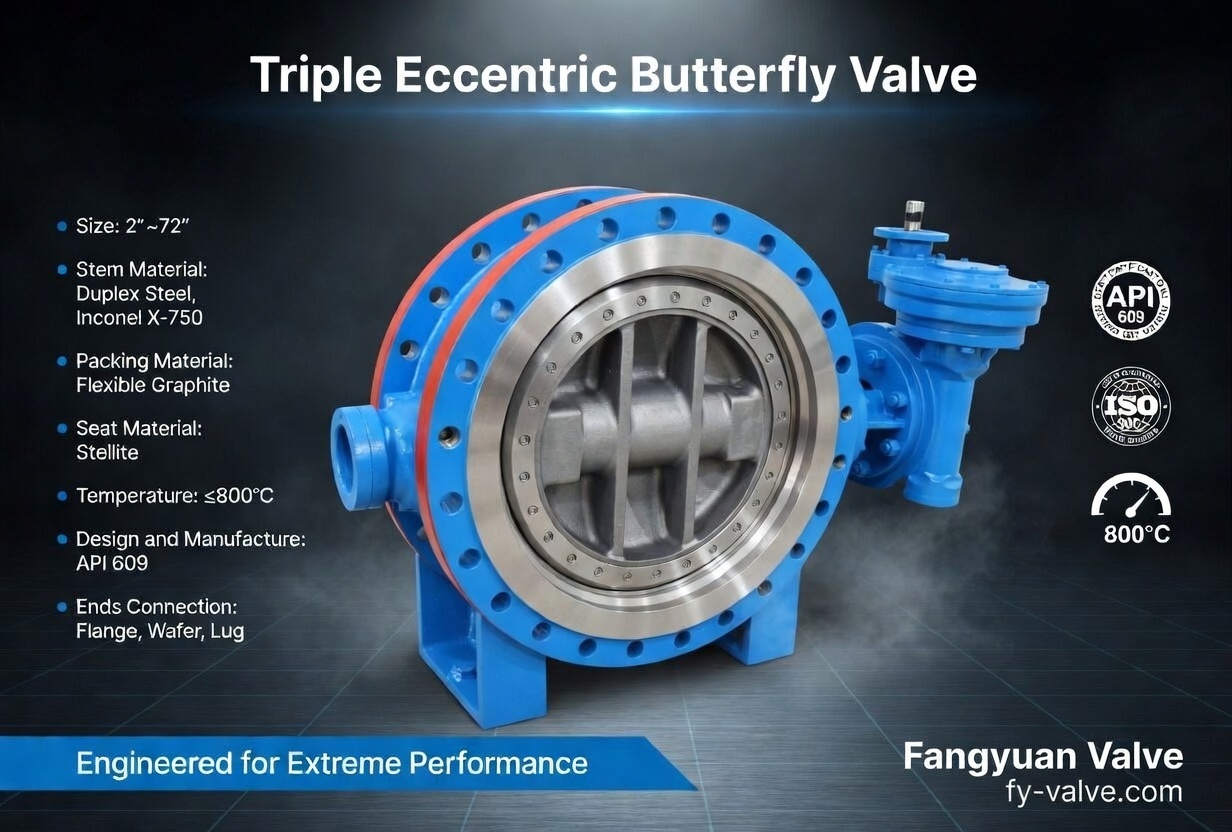
Typical advantages
- minimal friction between sealing surfaces
- reduced wear during operation
- longer service life in demanding duty
- strong sealing performance for critical applications
Common applications
- petroleum processing
- chemical plants
- metallurgy
- hydropower systems
- other severe or high-demand industrial services
Where operating conditions are more aggressive or the cost of valve failure is higher, a triple eccentric butterfly valve is often the more appropriate choice. It is especially valuable when long-term sealing stability matters more than initial purchase price alone.
Quick Comparison
Here is a simplified comparison to help distinguish the two designs.
|
Valve Type
|
Best Fit
|
Main Strength
|
Typical Use
|
|
Double Eccentric Butterfly Valve
|
Water and general industrial service
|
Good sealing with practical durability
|
Water treatment, utility lines, power plants
|
|
Triple Eccentric Butterfly Valve
|
Demanding industrial applications
|
Lower wear and stronger long-term sealing
|
Oil, chemical, metallurgy, hydropower
|
This comparison is useful as a starting point, but actual valve selection should always consider pressure, temperature, media, cycle frequency, and shut-off requirements.
Key Factors to Review Before Selection
Good valve selection is less about product names and more about matching the design to the way the system will actually run. Pipeline conditions are rarely identical from one project to the next. A water distribution system may care most about dependable flow and easy maintenance access, while an industrial facility may be dealing with harsher media, tighter shut-off requirements, or more demanding pressure conditions. The valve has to suit the service, not just the specification sheet.
That is why sealing duty, cycling frequency, and long-term operating cost all matter. In less demanding service, a double eccentric butterfly valve may provide the right balance of performance and cost. In applications where shut-off reliability carries more weight, a triple eccentric butterfly valve often makes more sense. The same logic applies to valve cycling. The more often the valve opens and closes, the more important it becomes to limit friction and control seat wear. Over time, the cheapest valve on paper may be the most expensive one in service if it creates more maintenance work, leakage risk, or downtime.
Why Customization Matters in Water Projects
In water projects, installation conditions are rarely identical from one system to another. Pipeline diameter, operating pressure, connection standard, and maintenance access can all influence the valve choice. That is why customizable butterfly valve solutions are often preferred over one-size-fits-all selections.
A valve supplier that can adapt design details to project conditions helps improve:
- installation compatibility
- sealing performance in the actual line
- operational stability over time
- long-term maintenance efficiency
For water infrastructure, where service continuity is often a major concern, this flexibility can make a real difference.
Both double eccentric butterfly valves and triple eccentric butterfly valves play important roles in modern piping systems, but they serve different priorities. Double eccentric designs are often a strong fit for water treatment, utilities, and general industrial use, while triple eccentric designs are better suited to more demanding service where wear reduction and sealing reliability are essential.
For engineers, contractors, and buyers, the best choice comes from matching valve design to actual operating conditions. When the application is reviewed carefully, the right butterfly valve can improve reliability, reduce maintenance demand, and deliver stronger long-term performance across the project.



 English
 русский
 Español
 عربى
عربى